101.08 Lesson 8
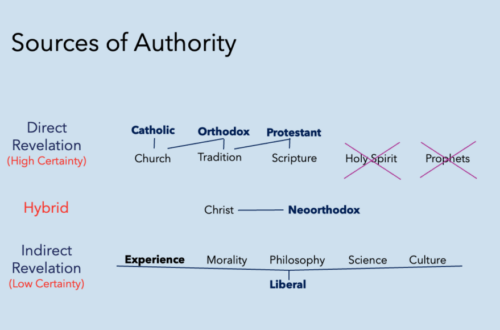
In the previous post, I explained that multiple theoretical models exist in Christian theology and identified the primary ones as Catholic/Orthodox, Protestant, Neoorthodox, and Liberal. Each model has a distinct epistemological approach, resulting in internal logical structures that are not compatible with one another. A person from any of these models will always find the theological reasoning of the other models suspicious, leading to endless, pointless debates that have not yielded any meaningful consensus for centuries.
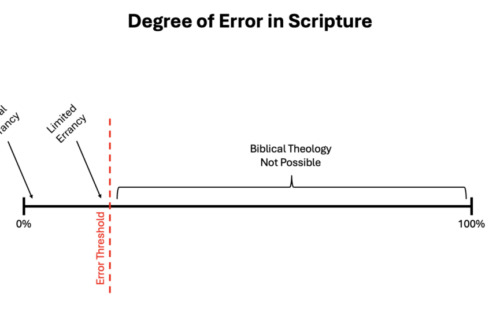
To avoid fruitless debates, among other reasons, I have placed all four models above the viability threshold on my chart, acknowledging them all as rigorous and potentially workable systems. At the same time, I expect the same courtesy from those coming from alternative perspectives, at least while I introduce and develop the Adventist model. Because the Adventist model builds on the same starting premise as the Protestant model – that Scripture is the highest authority – it is already understood that proponents of the other models will find fault. But I cannot both introduce the Adventist model as a subgroup of the Protestant model and defend the Protestant model itself at the same time. With that said, let us begin.
Christian theology was initially quite varied as the gospel spread throughout the Roman Empire. Theological consensus was achieved later through ecumenical councils, especially as Christianity was becoming the official religion of the Roman Empire. With the fall of Western Rome, theological uniformity increased even further as the Western Church developed a strong hierarchical ecclesial structure. When the Protestant Reformation later shifted the theological authority to Scripture, differences in interpretation began to surface almost immediately, and one of the biggest critiques of Protestantism from Catholic sources was the proliferation of conflicting theological perspectives. How can Scripture replace the authority of the Church if no one can agree on what it’s saying?
Protestants sought to resolve the interpretive problem in various ways, but in academic circles, two main solutions emerged: exegesis and the church fathers. Exegesis was the process of studying specific passages as objectively as possible by examining the grammar of the original languages, the context, the author’s background and culture, etc. But this process tended to fragment the Bible rather than produce interpretational consensus. Other Protestants turned to early tradition (the church fathers) as a guardrail for interpretation, which did reduce conflicting perspectives to some degree (it should be noted that some have appealed to the Wesleyan quadrilateral to introduce additional authorities such as philosophy, science, culture, experience, etc., but we will focus here on those who tried to remain as faithful to Sola Scriptura as possible).
However, the drawback of relying on the church fathers to guide interpretation is that these early theologians were deeply immersed in Greek philosophy and often relied on Greek metaphysical assumptions in their interpretation of Scripture. Over several centuries, the Greeks had developed an elaborate philosophical system that made specific assumptions about the nature of God, man, reality, time, and knowledge. The reasoning they used to arrive at those assumptions, however, often stemmed from a misunderstanding of elements we take for granted today, such as physics, genetics, chemistry, etc. Nonetheless, their views became integral to early Christian theology, and, via tradition, they continue to have an influence today.
Protestantism, thus, has produced the following two options: prioritize Scripture and exegesis, and make peace with theological pluralism, or rely on early tradition to guide interpretation and come under the influence of pagan philosophy. In this context, Adventism has sought to introduce a third option that aims to achieve a consensus similar to that of those relying on early tradition while circumventing the influence of philosophy. One way it has done this is by placing all the metaphysical paradigms on the table and letting the Bible decide between them rather than superimposing them on Scripture.
In the following lessons, I will introduce three macro-hermeneutical elements that I believe will provide Scripture with sufficient interpretative scaffolding independent of early tradition. I have labeled these three elements as: limited errancy, biblical metaphysics, and a biblical macronarrative, and will explain each one in a separate lesson. What I hope to demonstrate is that it is possible to overcome the interpretational challenges of Scripture without relying on the church fathers or Greek philosophy.
Recommended reading:
The Shape of Sola Scriptura by Keith Mathison – A book that acknowledges Protestant dependence on the church fathers in interpretation:
The History of Christian Thought by Jonathan Hill – A book on Christian history that describes early Christian dependence on Greek philosophy:
Basic Elements of Christian Theology by Fernando Canale and The Essentials of Christian Thought by Roger Olson – Two books explaining the problems with Greek philosophy:
My own book on Sola Scriptura: